
Classic Kratky is "set and forget": fill the container once and let the plant drink it down. That works for lettuce, which finishes in weeks. A tomato grows for months and can drink a quart or more a day once it is fruiting, so it will empty almost any container long before the harvest is over. Topping up a Kratky tomato reservoir is part of growing tomatoes. The skill is doing it without taking away the air the roots depend on.
How the Water Level Works in Kratky
- At the start, the solution touches the bottom of the net cup.
- As the plant drinks, the level drops and an air gap opens under the lid.
- The roots split into two kinds: air roots in the gap, which take in oxygen, and water roots below, which take in water and nutrients.
- The air roots are adapted to air. If the level rises and covers them for long, they can't breathe, and they start to die and rot.
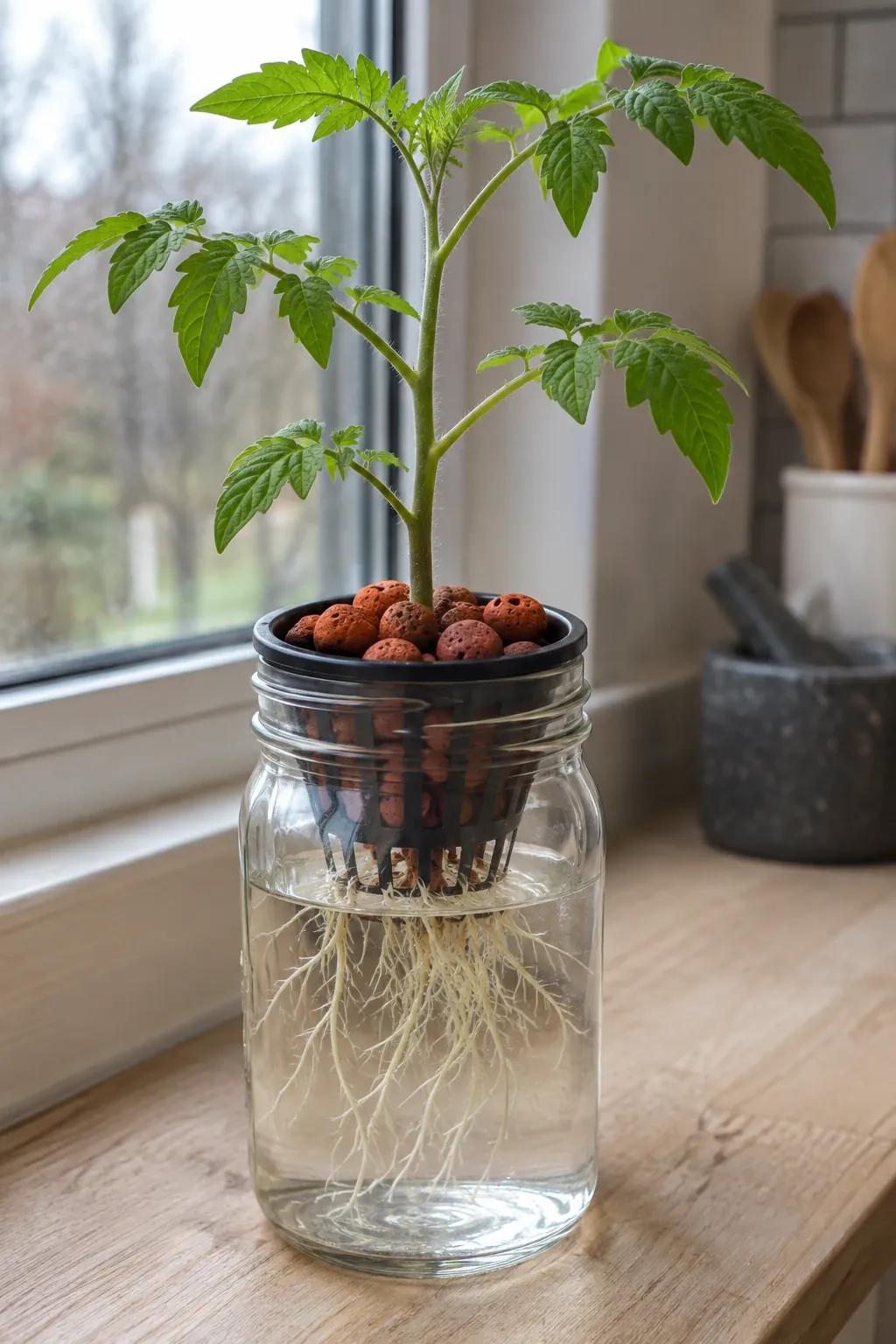
That is why the rule for topping up a Kratky tomato is simple: refill to the water roots, never back up over the air roots.
How to Top Up, Step by Step
- Find the line. Look at the roots, or at the mark you made on the container. Note where the white air roots end and the water roots begin.
- Mix the top-up in a separate bucket. Check its pH, and its strength with an EC meter if you have one.
- Choose the strength. If the reservoir's EC has risen, the plant has been drinking more water than food, so top up with plain water or a weak mix. If EC has fallen, top up at full strength. Without a meter, half strength is a cautious middle ground.
- Pour slowly down the side of the container, not over the roots, until the level is back at the water roots and no higher.
- Leave the air gap. For a big tomato, a few inches of air under the lid is normal and healthy.
- Mark the new level and note the date, so you learn how fast your plant drinks.
How Often?
There is no fixed schedule; it depends on the plant's size, the heat and the container. A young plant may go weeks. A fruiting tomato in summer can need a top-up every few days. Check the level every couple of days once flowers appear, and never let it fall so low that the water roots dry out, because sudden swings in water supply are linked to blossom end rot and to fruit splitting.
What Goes Wrong When You Overfill
Filling back up to the net cup drowns the air roots. Within days they can turn brown and slimy, and the plant wilts even though it is standing in water. That is root rot in Kratky, and overfilling is one of its most common causes.
A bigger container means fewer, smaller top-ups: see Kratky tomato container size. What to put in the top-up is covered in Kratky tomato nutrients.
Back to the Kratky method for tomatoes.
Frequently Asked Questions
Do you have to add water to Kratky tomatoes?
Yes. A tomato drinks far more over its season than one fill of a normal container holds, so it needs topping up. Only lettuce-sized crops reliably finish on a single fill.
How high should you refill a Kratky tomato?
Only up to where the water roots start, leaving the air roots and the air gap above the solution. Never refill to the bottom of the net cup once air roots have formed.
Should you top up with water or nutrient solution?
It depends on the strength left in the container. If an EC meter shows the strength rising, use plain water or a weak mix; if it is falling, use full-strength solution. Without a meter, half-strength solution is a safe choice.