
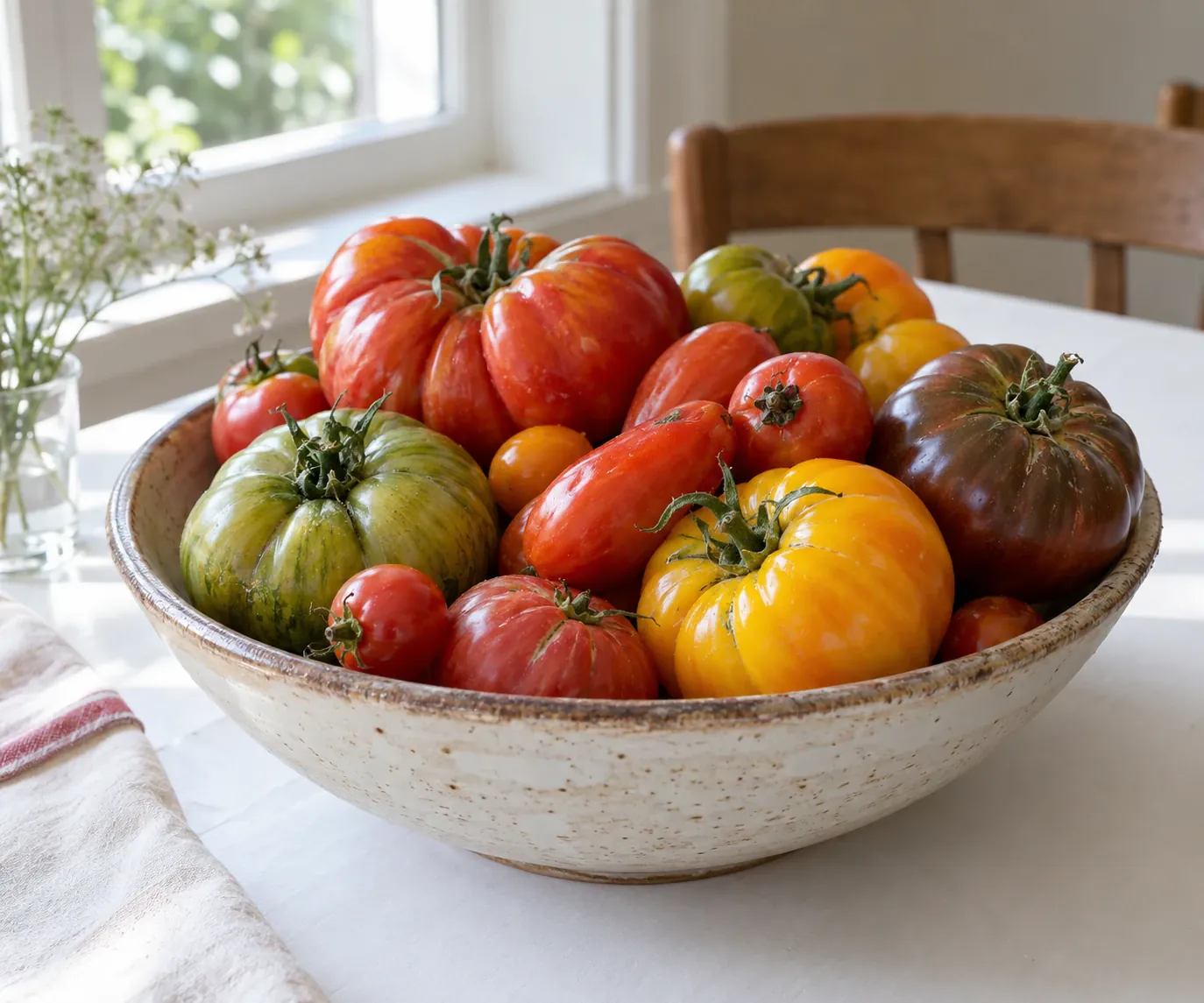
Almost any tomato can grow in a Kratky system. What changes from one variety to the next is how big the plant gets, how long it keeps growing, and so how big a container, how many top-ups and how much support it needs. This page compares 20 tomato varieties by those Kratky needs, with the flavor and best use of each.
Start with the Growth Habit
The single most useful thing to know about a tomato for Kratky is its growth habit, which the seed packet lists.
| Growth habit | How it grows | Kratky setup |
|---|---|---|
| Micro and dwarf | Stays compact, from under a foot to a few feet | A jar or bucket on a shelf under a grow light |
| Determinate (bush) | Grows to a set height and ripens much of its crop at once | A 5 gallon bucket or larger, with a cage or stake |
| Semi-determinate | Between the two: a mid-size bush that keeps fruiting a while | A 5 gallon bucket or larger, with a stake |
| Indeterminate (vining) | Keeps growing and fruiting all season, often past 6 feet | A 10 gallon tote or larger, tall support, outdoors or a greenhouse |
How the two main habits differ in practice is in determinate vs indeterminate tomatoes for Kratky. Container sizes are covered in Kratky tomato container size, and support in pruning and supporting Kratky tomatoes.
20 Tomato Varieties Compared
| Variety | Fruit type | Growth habit | Flavor and best use |
|---|---|---|---|
| Roma | Paste (plum) | Determinate | Thick flesh, low moisture; sauces and canning |
| Cherry | Cherry | Mostly indeterminate | Sweet, in red, yellow and orange; salads and snacking |
| Beefsteak | Large slicer | Indeterminate | Large and meaty; slicing and grilling |
| San Marzano | Paste | Indeterminate | Rich and intense; pasta sauce and soup |
| Heirloom (group) | Varies | Mostly indeterminate | Open-pollinated varieties with a long history and distinct flavors |
| Campari | Cocktail | Indeterminate | Balanced sweet and acid; fresh eating and garnish |
| Yellow Pear | Small, pear-shaped | Indeterminate | Sweet and tangy; salads and appetizers |
| Brandywine | Large slicer, heirloom | Indeterminate | Rich, pinkish-red; salads and sandwiches |
| Yellow Brandywine | Large slicer, heirloom | Indeterminate | Rich and sweet, bright yellow; slicing fresh |
| Green Zebra | Medium, striped | Indeterminate | Tangy, green striped; salads and salsas |
| Black Krim | Medium to large, heirloom | Indeterminate | Dusky, complex, smoky; slicing and sandwiches |
| Cherokee Purple | Medium to large, heirloom | Indeterminate | Dusky purple, rich and sweet; salads and sandwiches |
| Sun Gold | Cherry | Indeterminate | Orange and very sweet; snacking and salads |
| Mortgage Lifter | Large slicer, heirloom | Indeterminate | Large, meaty; sandwiches and fresh eating |
| Chocolate Stripes | Medium, striped | Indeterminate | Maroon with green streaks, earthy; caprese and sandwiches |
| Amish Paste | Paste, heirloom | Indeterminate | Meaty, few seeds; thick sauces and preserves |
| Indigo Rose | Small to medium | Indeterminate | Purple-black skin, sweet and tangy; salads and salsas |
| Green Grape | Cherry | Semi-determinate | Sweet and fruity with a tart edge; snacking |
| Arkansas Traveler | Medium, heirloom | Indeterminate | Heat-tolerant, tangy-sweet; slicing fresh |
| Great White | Large slicer | Indeterminate | Pale yellow flesh, mild and sweet; salads and sandwiches |
Growth habits are the usual listing for each variety; individual seed strains can differ, so check the packet.
Which Varieties Are Easiest in Kratky
- Easiest: micro and dwarf tomatoes, and cherry tomatoes. They stay smaller, drink less and fruit sooner. Cherry tomatoes typically ripen in 50 to 70 days.
- Best for canning in a small space: Roma, because it is a compact determinate bush that ripens much of its crop together.
- Most demanding: large indeterminate slicers and heirlooms such as beefsteak, Brandywine and Mortgage Lifter. They need the largest containers, regular top-ups and tall support, and they are the most prone to blossom end rot when the water supply swings.
Whatever you choose, the growing steps are the same: see how to grow tomatoes with the Kratky method. For the five varieties cooks reach for most, read the top 5 distinct tomato cultivars, and find more articles on the Kratky tomato blog.